
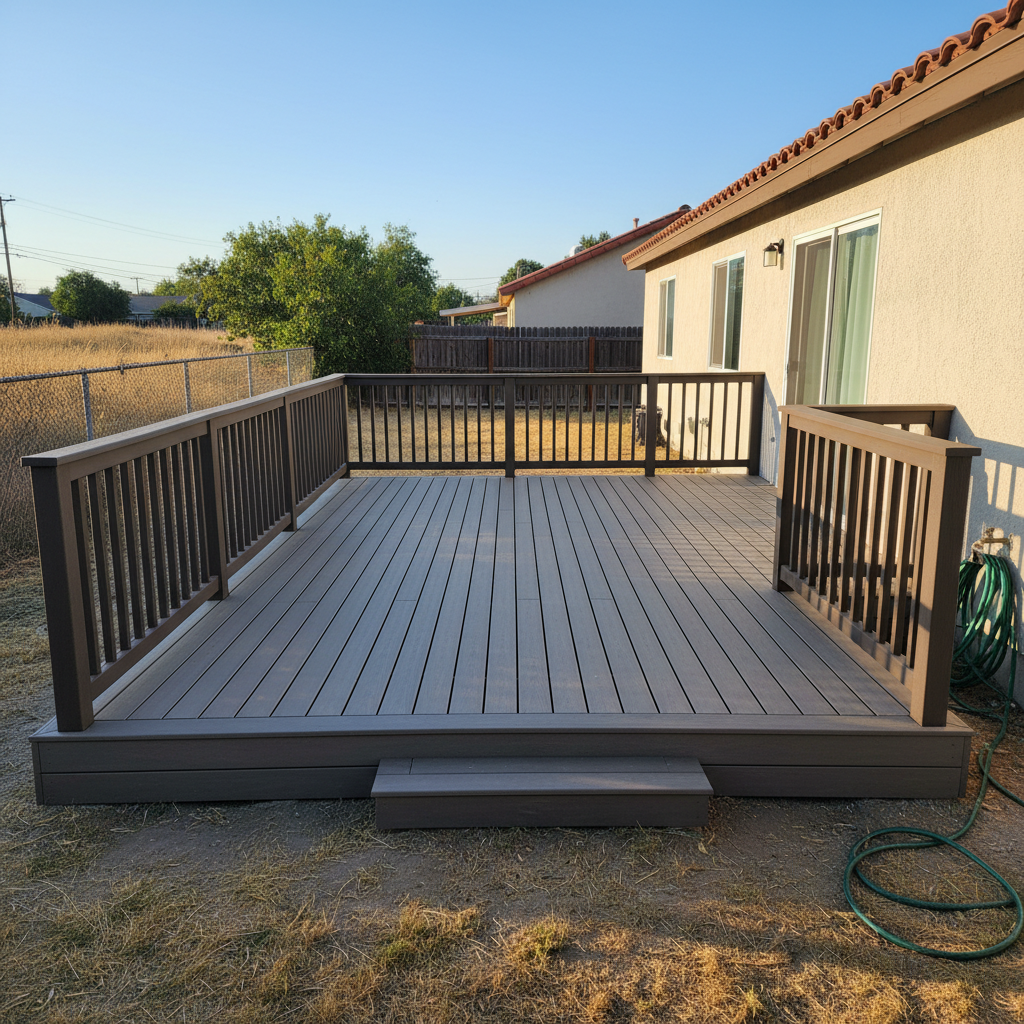
Most people choosing a deck builder end up comparing three bids that all say roughly the same thing: quality materials, experienced crew, free estimate. That doesn't tell you anything. What actually separates a good deck job from one you're redoing in five years comes down to things you can check, not things you're told.
I'll go through what those are.
The license number is the first thing to check, not the last
In California, deck construction generally falls under a B (General Building) or C-5 (Framing and Rough Carpentry) license from the Contractors State License Board. Any contractor can tell you they're licensed. The CSLB website will tell you if that's true, and it'll also show you if they've had complaints, bond claims, or a suspended license in the last few years. This takes two minutes and most homeowners never do it.
Ask for proof of general liability insurance and workers' comp, too. If a worker falls off a ledger scaffold at 9 feet and there's no comp policy, that claim becomes your problem, not theirs. A contractor who hesitates to hand over a current certificate of insurance is telling you something.
How permits actually work here
Santa Monica requires a building permit for most new decks and for any deck attached to the house, pulled through the city's Building and Safety division. Decks over 30 inches above grade need guardrails at 42 inches with balusters spaced so a 4-inch sphere can't pass through, and that gets checked at inspection. If your lot sits near the bluffs or within the Coastal Zone, which covers a good stretch of the city close to the beach, certain work may also need a Coastal Development Permit on top of the building permit. That's a separate review and it adds time.
A contractor who tells you "we don't need a permit for that" on an attached deck is either wrong or hoping you don't ask again. Unpermitted decking shows up on home inspections when you sell, and buyers' agents in this market know to look for it.
What the climate here actually does to a deck
Santa Monica doesn't get freeze-thaw damage the way inland cities do, so footings aren't fighting frost heave. What they're fighting is the marine layer. That fog rolls in most mornings from May through August, and it keeps wood framing damp longer than people expect for a place that's sunny by noon. Untreated or poorly flashed ledger boards rot from the inside before the surface ever looks bad.
Salt air off the ocean corrodes standard fasteners faster than most homeowners realize, especially within a mile or so of the beach. A deck built with plain galvanized screws and joist hangers can show rust streaks and weakened connections in under five years in that zone. Stainless steel fasteners and hangers cost more up front and they're the right call this close to the water.
UV exposure matters too, fog or no fog. Wood decking grays and checks faster here than inland because the sun is still intense even on overcast mornings once it burns through by late morning. Composite decking fades less but the cheaper lines still chalk and lose color over 8 to 10 years. A builder who knows the difference between capped and uncapped composite boards, and recommends based on how much direct sun your particular yard gets, is paying attention to your lot rather than reading from a brochure.
What's already in the ground matters
A lot of Santa Monica's housing stock in Ocean Park, Sunset Park, and the Pico neighborhood dates to the 1920s through the 1950s. Decks going onto those houses are often tying into old rim joists or foundation walls that were never built to carry a ledger load, and a contractor should check that framing before bolting anything to it, not after. Newer construction and some of the hillside lots near Santa Monica Canyon have different soil conditions, more sand near the beach flats, firmer and sometimes rockier ground up in the canyon, which changes how deep a footing needs to go and whether it needs to be engineered rather than just poured to a standard depth. Footings here commonly run 12 to 18 inches below grade depending on the soil report and the load, but that number should come from an actual calculation for your site, not a guess.
What the contract and the bid should look like
A real bid breaks out labor, materials, and permit costs separately. If three contractors bid your job and one comes in at half the others, ask why. It's usually thinner lumber spans, no engineering on an elevated deck, or labor that's going to a crew paid by the day with no stake in doing it right.
Look for:
- A written contract with a payment schedule tied to completed stages, not a large deposit up front
- A specific lumber or composite brand and grade named in the contract, not just "decking material"
- A stated timeline for curing, drying, or staining steps, since most stains need the wood to dry for several weeks before the first coat goes on
- A lien release at final payment so a sub or supplier can't come after you later if the contractor didn't pay them
What should make you walk away
Cash-only pricing with a discount attached. No local address or a P.O. box instead of a business location. Pressure to sign the same day. A quote with no breakdown of square footage, board type, or footing count. No mention of a permit on an attached deck over a few feet off the ground. A verbal promise instead of a written warranty on workmanship.
None of this is complicated, it just takes checking instead of trusting the pitch. If you want to see how we scope and price a job, Valor Outdoor Spaces walks through the same details with every homeowner before we touch any lumber.